

Invisible Labour & Women’s Leadership: Leading Without Burnout in a World That Expects Everything
Every day, women lead teams, build businesses, manage households, mentor others, solve problems, and still carry emotional, mental, and operational responsibilities no one sees.
This is what we call invisible labour.
It’s the work behind the work.
The thinking before the decision.
The emotional regulation before the meeting.
The planning no one applauds.
As we celebrate Women’s History Month, it’s important to talk about leadership beyond titles and applause, and focus on the systems women need to lead sustainably, not sacrificially.
Because leadership without structure leads to burnout.
And leadership without boundaries leads to quiet exhaustion.
What Is Invisible Labour?
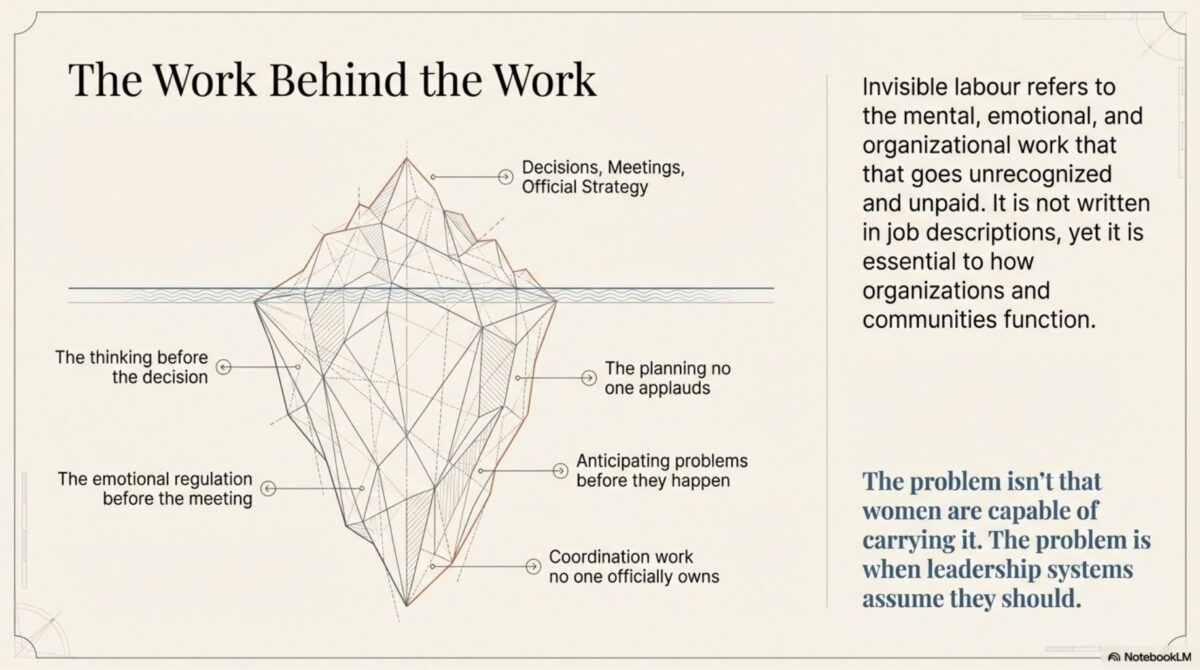
Invisible labour refers to the mental, emotional, and organizational work that goes unrecognized, unpaid, or unacknowledged.
For women in leadership, it often looks like:
- Remembering deadlines, birthdays, follow-ups, and expectations.
- Managing emotions in rooms where authority is questioned.
- Carrying team morale while still hitting performance targets.
- Doing coordination work no one officially owns.
- Thinking three steps ahead to prevent problems before they happen.
It’s not written in job descriptions, yet it’s essential to how organizations, families, and communities function.
The problem isn’t that women are capable of carrying it.
The problem is when leadership systems assume they should.
The Mental Load Women Leaders Carry
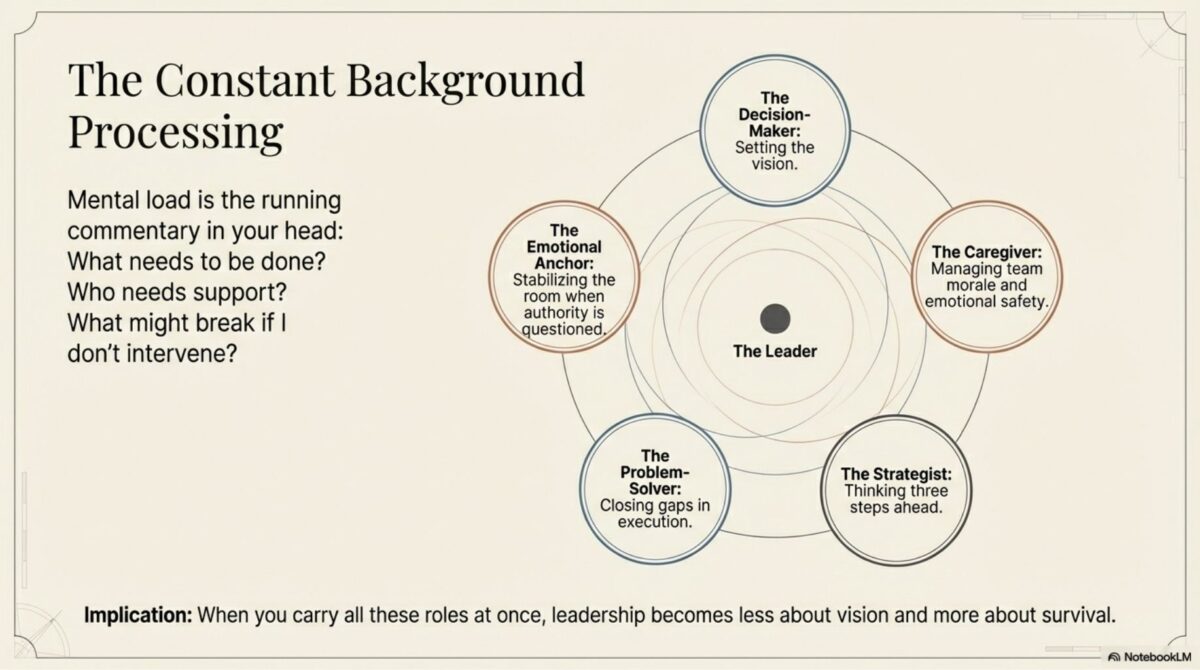
Mental load is the constant background thinking running in your head:
- What needs to be done?
- Who needs support?
- What might break if I don’t intervene?
- What’s the next move?
For women leaders, this becomes heavier because they are often:
- Decision-makers
- Caregivers
- Strategists
- Problem-solvers
- Emotional anchors
All at once.
So leadership becomes less about vision and more about survival.
And when leadership turns into survival mode, burnout is no longer a possibility, it becomes inevitable.
Why Burnout Is a Leadership Problem, Not a Personal Failure
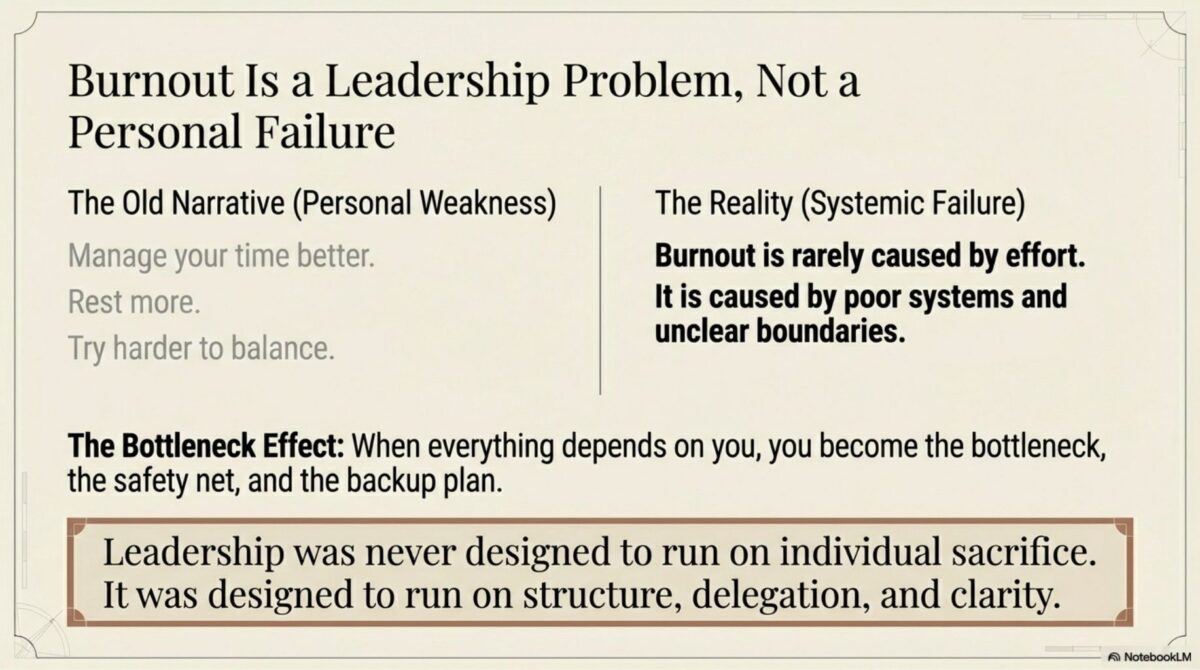
We often frame burnout as a personal weakness:
“Manage your time better.”
“Rest more.”
“Try harder to balance.”
But burnout is rarely caused by effort.
It’s caused by poor systems and unclear boundaries.
When everything depends on you:
- You become the bottleneck.
- You become the safety net.
- You become the backup plan.
Leadership was never designed to run on individual sacrifice.
It was designed to run on structure, delegation, and clarity.
One principle stands out:
Sustainable leadership is built on systems, not stamina.
You don’t win by doing more.
You win by designing better ways of working.
Boundaries Are a Leadership Skill, Not a Luxury
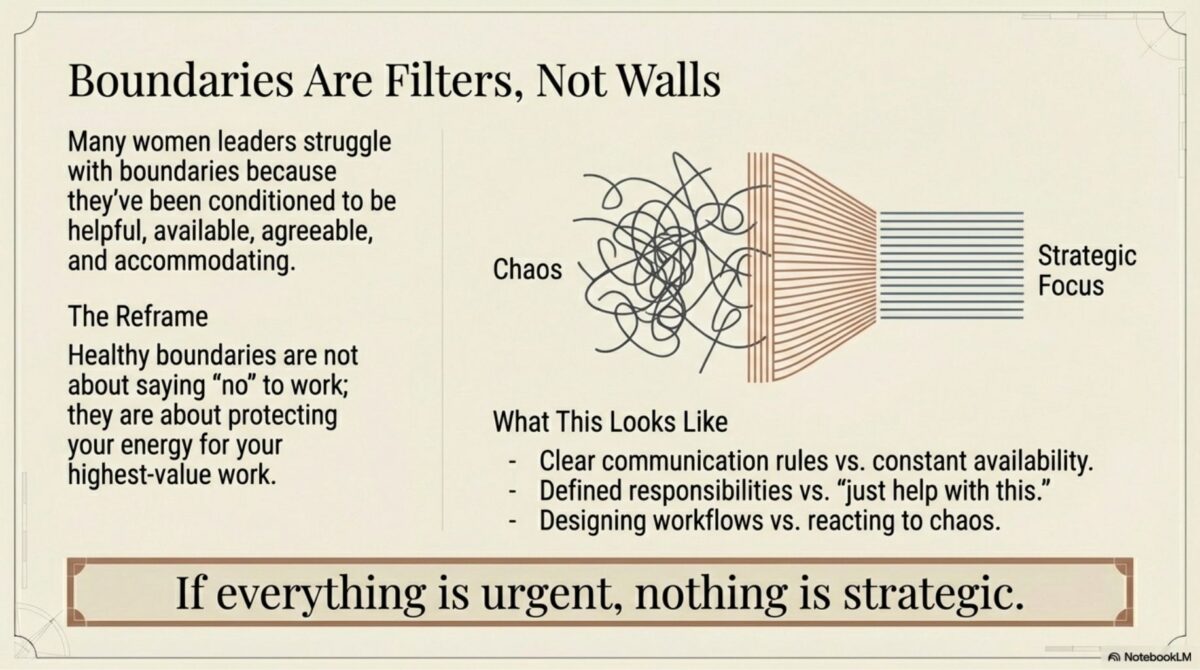
Many women leaders struggle with boundaries because they’ve been conditioned to:
- Be helpful
- Be available
- Be agreeable
- Be accommodating
But leadership without boundaries becomes emotional labour disguised as professionalism.
Healthy boundaries look like:
- Clear work hours and communication rules.
- Defined responsibilities instead of “just help with this.”
- Saying no without over-explaining.
- Designing workflows instead of reacting to chaos.
Boundaries are not walls.
They are filters that protect your energy for your highest-value work.
If everything is urgent, nothing is strategic.
Leadership Without Burnout Starts With Systems
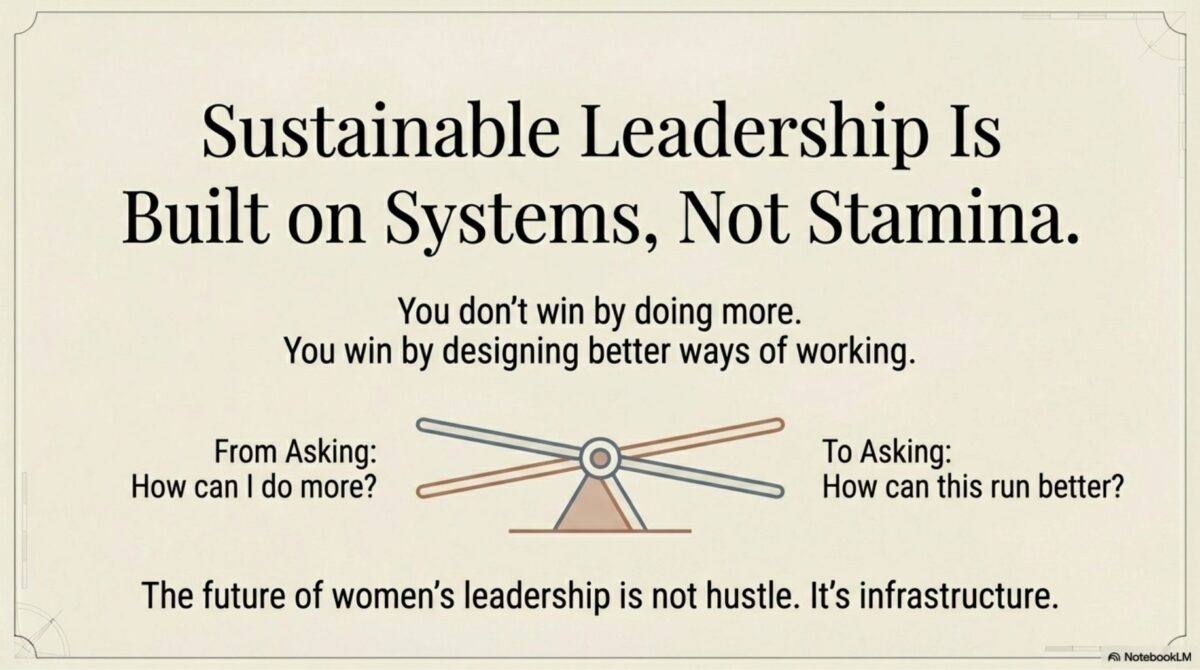
The future of women’s leadership is not hustle.
It’s infrastructure.
Instead of asking: “How can I do more?”
Ask: “How can this run better?”
Here’s what leadership without burnout actually looks like:
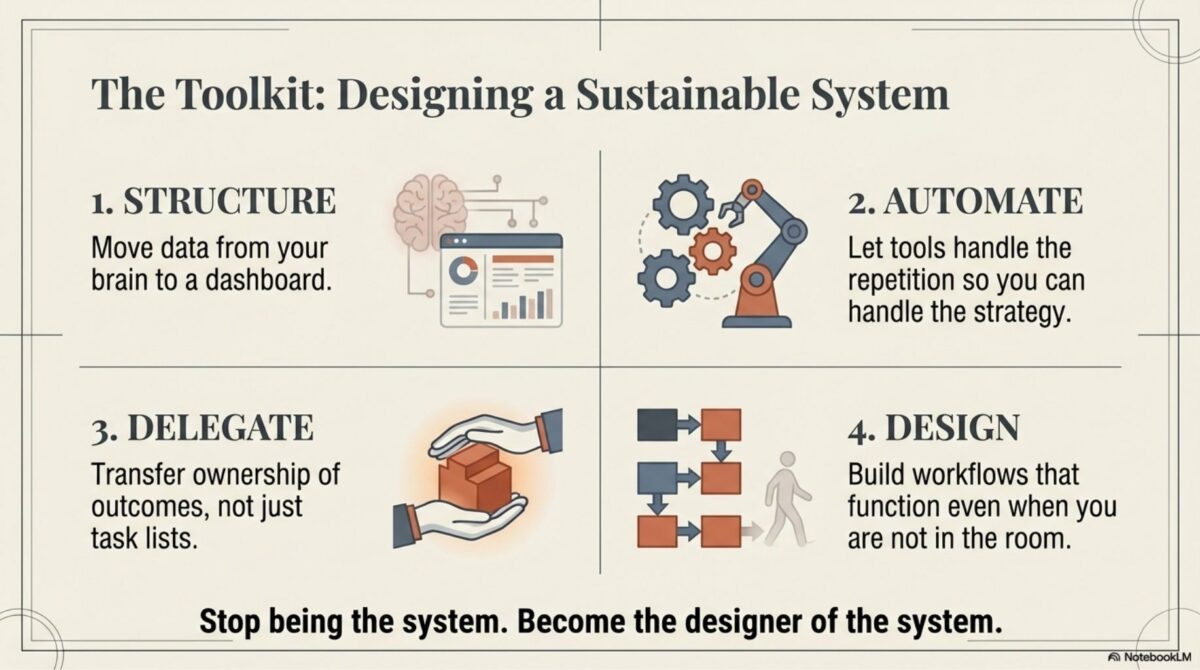
1. Replace Memory With Structure
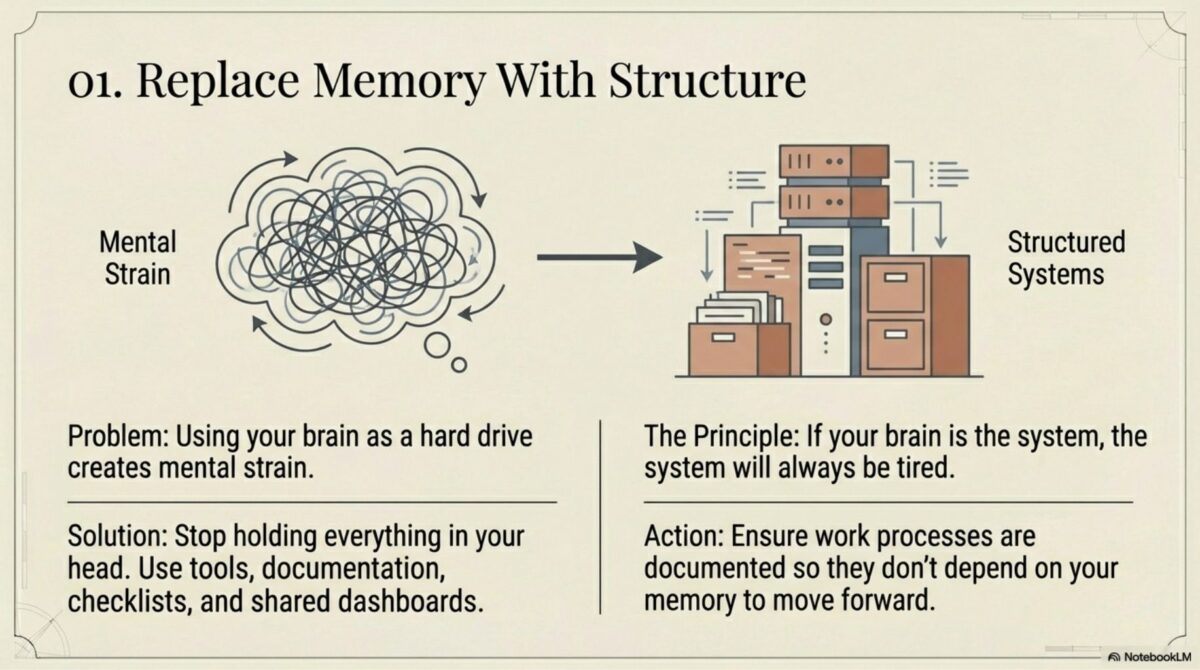
Stop holding everything in your head.
Use tools, documentation, checklists, and shared dashboards so work doesn’t depend on mental strain.
If your brain is the system, the system will always be tired.
2. Automate What Repeats
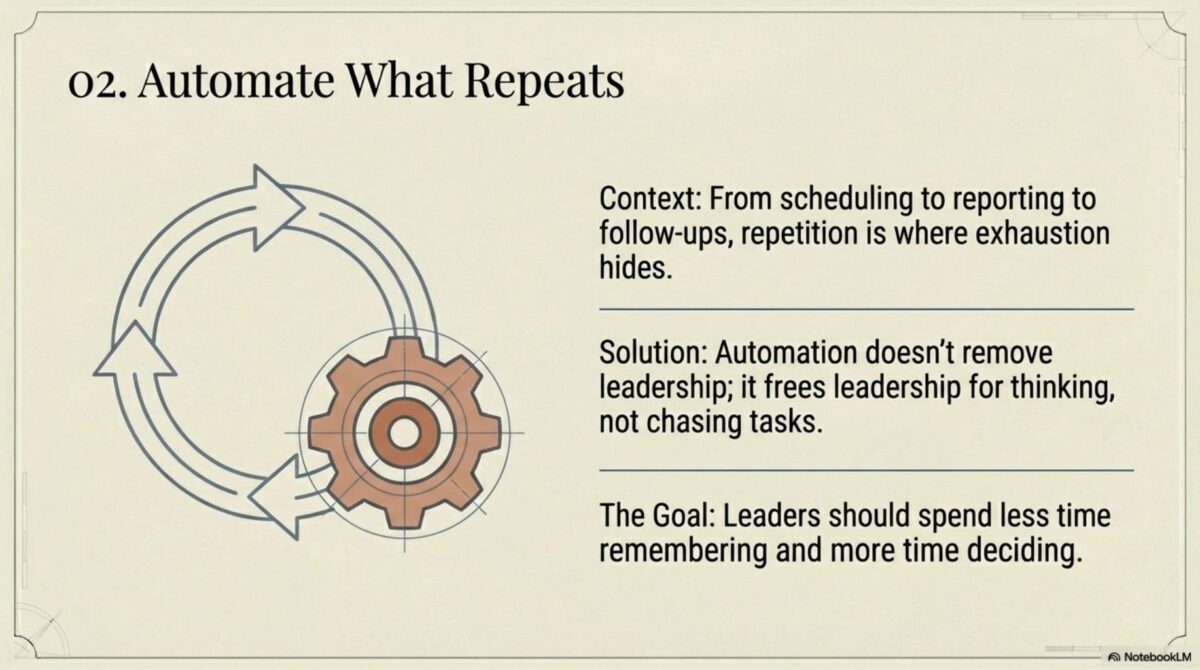
From scheduling to reporting to follow-ups, repetition is where exhaustion hides.
Automation doesn’t remove leadership.
It frees leadership for thinking, not chasing tasks.
Leaders should spend less time remembering and more time deciding.
3. Delegate Outcomes, Not Just Tasks
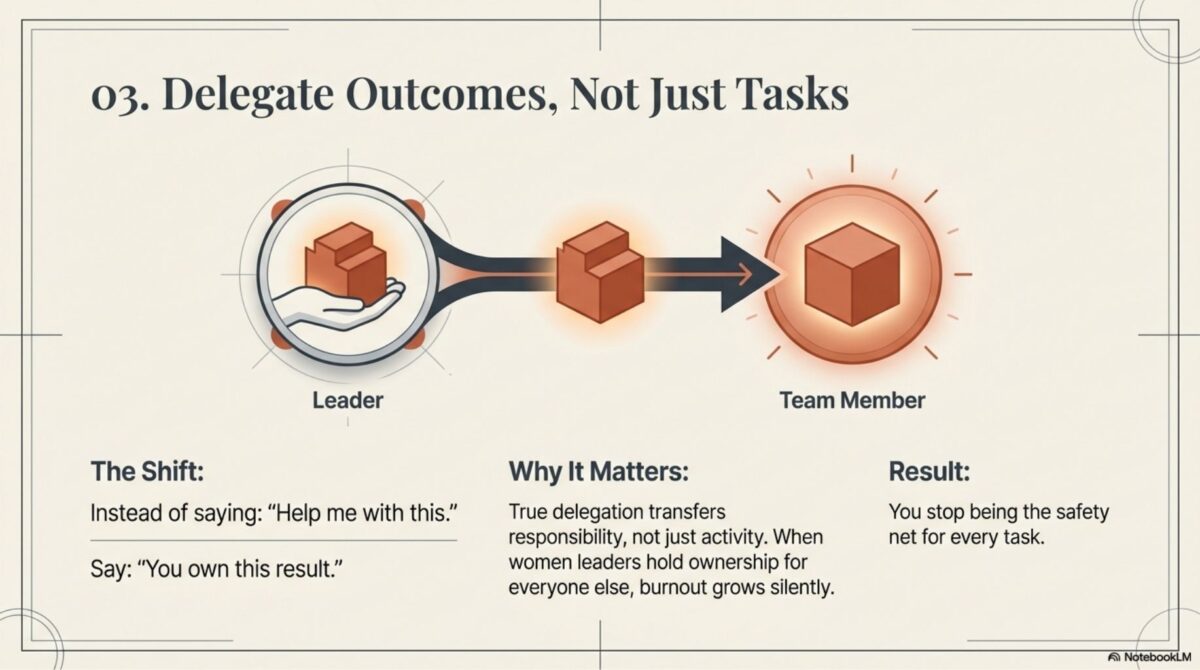
Instead of saying, “Help me with this,”
say, “You own this result.”
True delegation transfers responsibility, not just activity.
When women leaders hold ownership for everyone, burnout grows silently.
4. Design Workflows, Not Firefighting
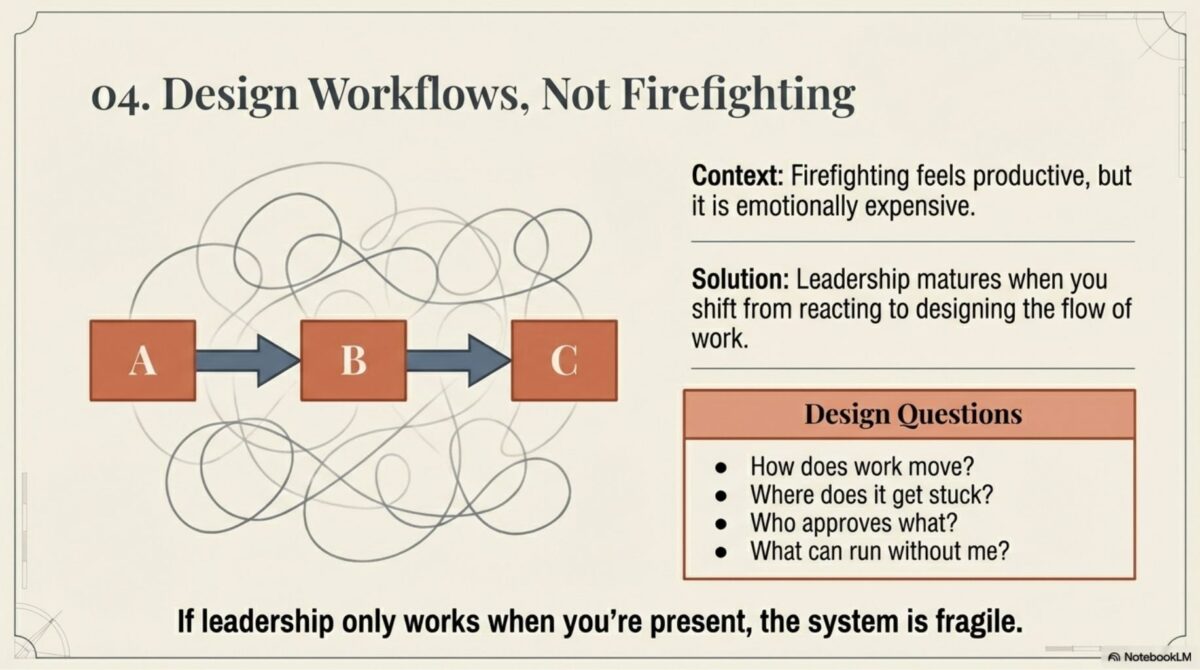
Firefighting feels productive, but it’s emotionally expensive.
Leadership matures when you shift from reacting to designing:
- How does work move?
- Where does it get stuck?
- Who approves what?
- What can run without you?
If leadership only works when you’re present, the system is fragile.
Redefining Women’s Leadership in This Era
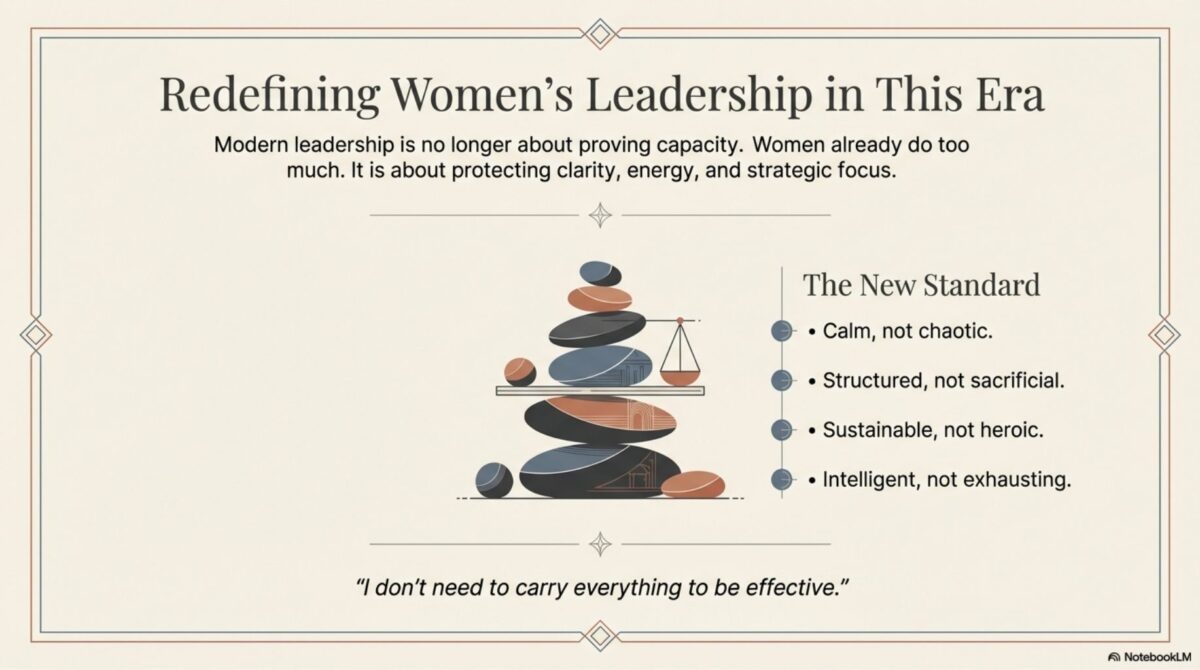
Modern leadership for women is no longer about proving capacity.
Women already do too much.
It’s about protecting clarity, energy, and strategic focus.
Women’s leadership today is:
- Calm, not chaotic.
- Structured, not sacrificial.
- Sustainable, not heroic.
- Intelligent, not exhausting.
It’s leadership that says: “I don’t need to carry everything to be effective.”
Because when women stop managing everything manually, they start leading powerfully.
Invisible Labour Deserves Visibility — And Redesign
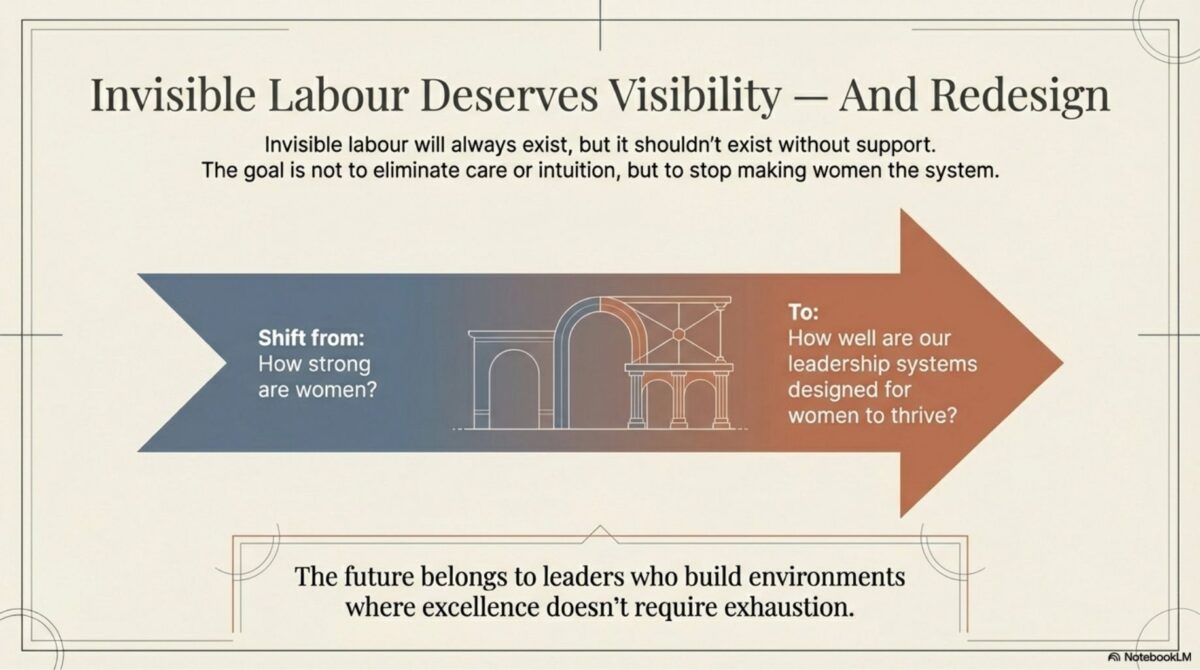
Invisible labour will always exist.
But it shouldn’t exist without support.
The goal is not to eliminate care, intuition, or emotional intelligence in leadership.
The goal is to stop making women the system instead of the designers of the system.
As we celebrate Women’s History Month, the conversation should shift from:
“How strong are women?”
to
“How well are our leadership systems designed for women to thrive?”
Because the future belongs to leaders who build environments where excellence doesn’t require exhaustion.
And women deserve leadership that feels powerful, not punishing.
Final Thought
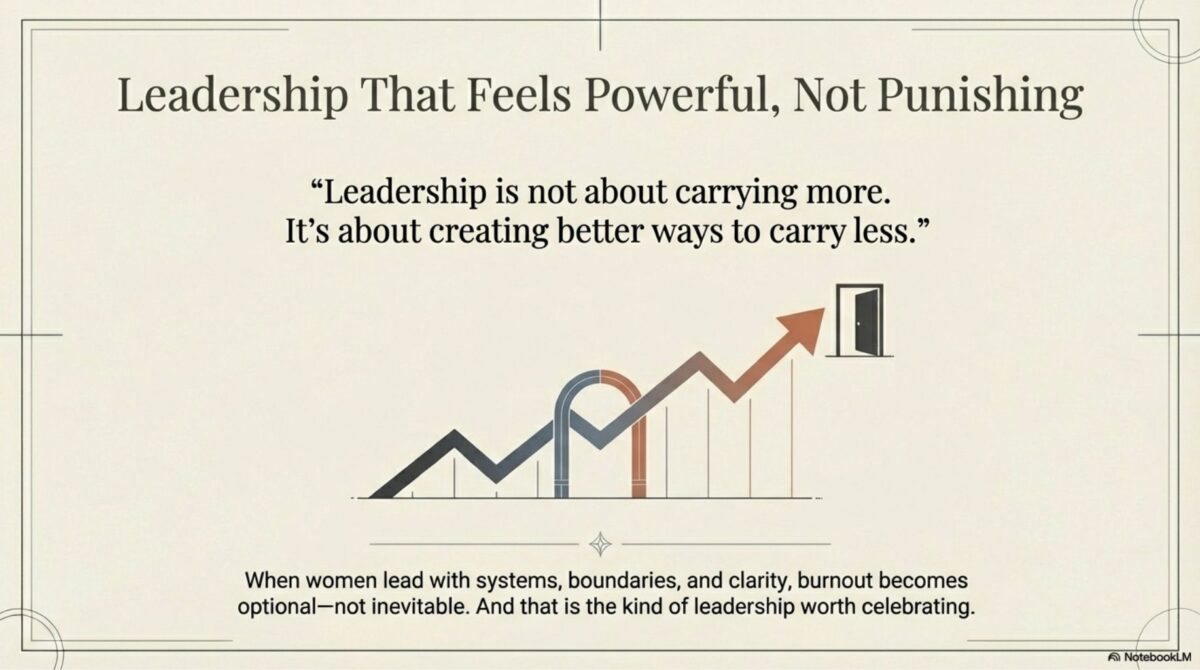
Leadership is not about carrying more.
It’s about creating better ways to carry less.
When women lead with systems, boundaries, and clarity, burnout becomes optional, not inevitable.
And that is the kind of leadership worth celebrating.

Reset without pressure
Calm Systems Reset for Founders
A 5-day guided reset for founders who want clarity, steadiness, and systems that support how they actually work.
Free to join · 10–20 minutes a day · Optional WhatsApp reminders
About Tolu

Tolu Amadi is a Secure Growth Architect who helps founders design calm, capacity-led systems for sustainable growth without burnout. Her work focuses on operational clarity, calm leadership, and rebuilding after periods of pressure or instability.